
Amirhossein Enayati


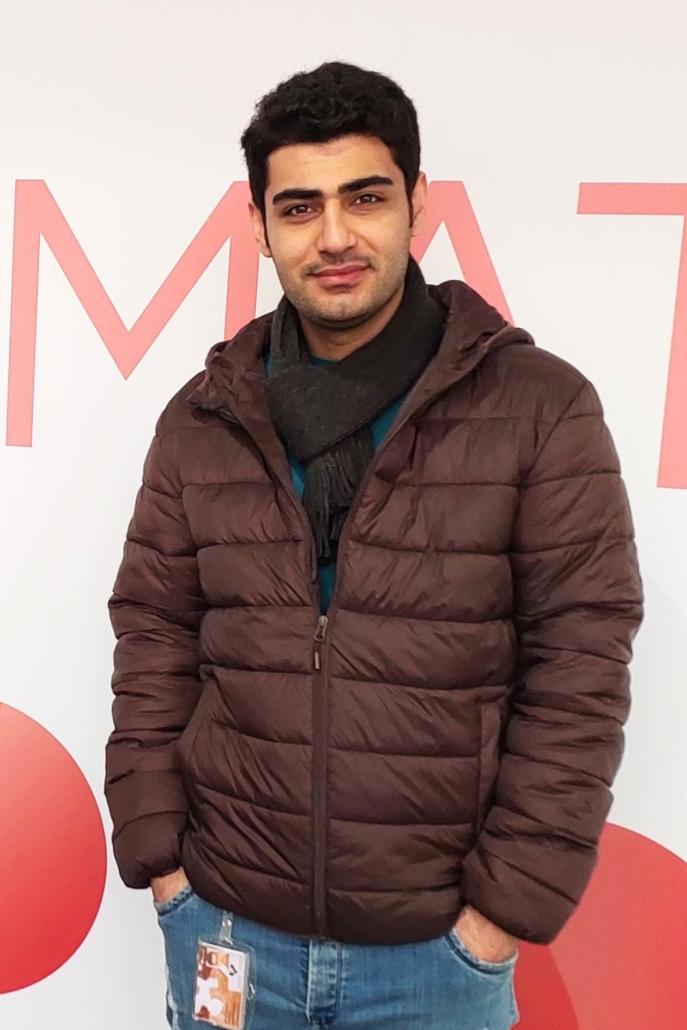
Amir earned his B.Sc. (2020) in Polymer Engineering, and later his M.Sc. (2022) in Polymer Engineering (Processing) through the Ministry of Science’s Graduate Talent Program, both at Tabriz University of Technology (Sahand). His master’s research, conducted under the supervision of Prof. Behzad Pourabbas, focused on the synthesis and functionalization of monomers for UV-curable resins and bio-inks, and photopolymerization behavior of novel multifunctional epoxy-methacrylate macromers for 3D printing. Following his master’s degree, Amir joined the research group of Prof. Mehdi Salami-Kalajahi, where he worked on polymeric materials for energy storage, the design of photo-curable polymer electrolytes for lithium-ion batteries, and stimuli-responsive nanoparticles for sensor applications until 2024.
Alongside his academic work, Amir gained substantial industrial experience as Chief Research, Development and Technology Officer (CTO) at a plastics manufacturing company specializing in extrusion, injection molding, and thermoforming, a role he held until November 2024. He also worked as a Quality Control Specialist in the polymer pipe industry and co-founded two startups, in 2020 and 2022, focused on vat photopolymerization-based 3D printing inks, photo-curable resins, and inks.
His interests include photopolymerization (3D/4D printing), polymeric materials for energy storage, photo-curable polymer electrolytes, emulsion polymerization, and polymer recycling.
He joined POLYMAT and the University of the Basque Country (EHU) in December 2024 as a Ph.D. student. He is currently conducting his doctoral research under the supervision of Dr. Aitor Barquero. His research is part of the Industrial Liaison Program (ILP), focusing on the design of advanced bonding/debonding chemistries to improve the recyclability of coatings and adhesives from various substrates.
Synthetic Photoresist-Based Multifunctional Epoxy-methacrylate Macromers in 3D Printing Resin Formulations: Photocuring Kinetics and Properties
A. Enayati, H. Alihemmati and B. Pourabbas

