
Dr. Clara Garcia Astrain


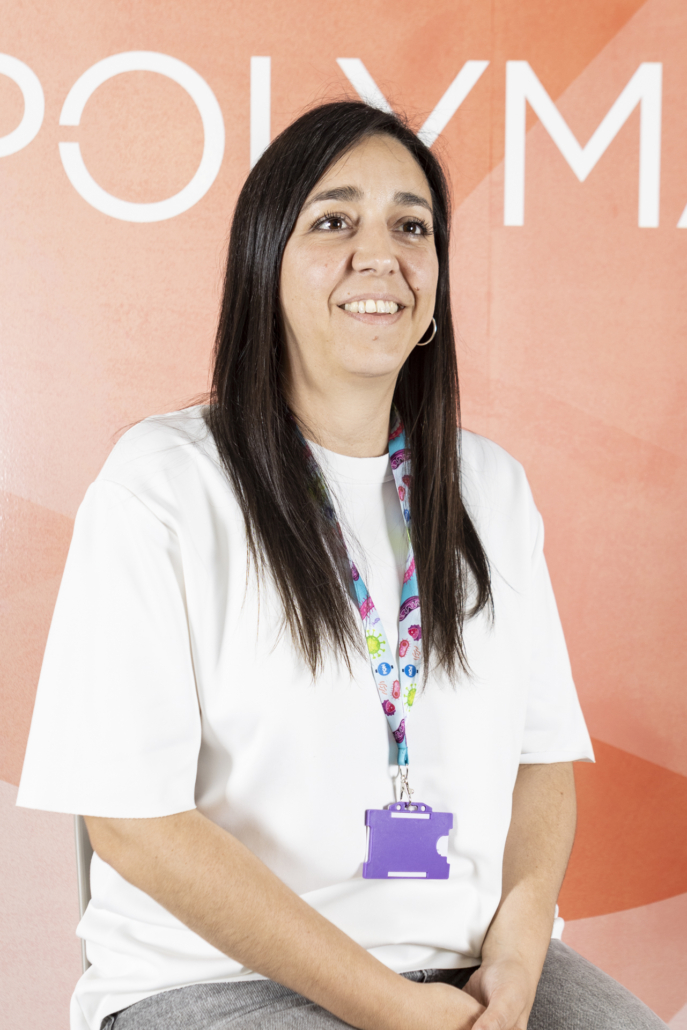
Dr. García-Astrain received her BSc in Chemistry from the University of Navarra and her MSc in Renewable Materials Engineering from the University of the Basque Country (UPV/EHU), where she also completed her PhD (2015), including a research stay at the Karlsruhe Institute of Technology (Germany). Her doctoral research focused on the development of click-crosslinked hydrogels and nanocomposites for biomedical applications.
She has developed an international research career across leading institutions, including the University of Strasbourg (CNRS, France), BCMaterials and CIC biomaGUNE. At CICbiomaGUNE she worked as a Juan de la Cierva postdoctoral fellow at the group of Prof. Luis M. Liz-Marzán on nanoplasmonic materials for 3D sensing and imaging in complex biological models. In 2024, she joined POLYMAT as an Ikerbasque Research Fellow.
Her scientific contributions have been recognized through several competitive awards, including the 2026 Polymer Journal Future Faculty/Researcher Award, highlighting her emerging leadership in the field, and the 2025 Leonardo Grant from the BBVA Foundation, supporting innovative research with strong societal impact. She was also awarded the Best PhD Thesis Award by the Spanish Royal Society of Chemistry (RSEQ).
Her current research is focused on the development of functional polymer-based platforms for biosensing in advanced 3D disease models, with particular emphasis on cancer and infection systems. In the last years she has acquired significant experience in the development of plasmonic scaffolds for biosensing and bioimaging applications in complex 3D cell models. By integrating sensing capabilities into biomimetic environments, her work enables real-time monitoring of disease progression and therapeutic response, contributing to the development of more reliable and translational biomedical models.
Publicaciones
Novel printing strategy for high fidelity extrusion-based bioprinted multi-material nested models
M. Zelaia Amilibia, U. Aizarna-Lopetegui, L. Perez Sanchez, M. Henriksen-Lacey, G. Berasategi Onatibia, C. Garcia-Astrain, D. Mejia-Parra, C. Cortes and D. Jimenez de Aberasturi
3D (Bio)printed In Vitro Infection Models: Tools to Investigate Host-Pathogen Interactions and Accelerate the Discovery of Therapies
A. Mateo, L. Troncoso-Afonso, F. Perin and C. Garcia-Astrain
dECM-Supported Printing of Plasmonic Pillars for SERS Monitoring of Chemotherapy in 3D Tumor Models
L. Troncoso-Afonso, P. Vazquez-Aristizabal, G. Vinnacombe-Willson, Y. Henriquez-Banegas, P. Gonzalez-Callejo, P. Valera, M. Henriksen-Lacey, C. Garcia-Astrain and L. Liz-Marzan
Using thiol-ene click chemistry to engineer 3D printed plasmonic hydrogel scaffolds for SERS biosensing
L. Troncoso-Afonso, Y. Henríquez-Banegas, G. Vinnacombe-Willson, J. Gutierrez, G. Gallastegui, L. Liz-Marzán and C. García-Astrain
Growing Gold Nanostars on 3D Hydrogel Surfaces
G. Vinnacombe-Willson, C. García-Astrain, L. Troncoso-Afonso, M. Wagner, J. Langer, P. González-Callejo, D. Silvio and L. Liz-Marzán
Nanocomposite hydrogel microneedles: a theranostic toolbox for personalized medicine
C. Martins, C. García-Astrain, J. Conde and L. Liz-Marzán
3D Bioprinted Tumor-Stroma Models of Triple-Negative Breast Cancer Stem Cells for Preclinical Targeted Therapy Evaluation
P. González-Callejo, C. García-Astrain, A. Herrero-Ruiz, M. Henriksen-Lacey, J. Seras-Franzoso, I. Abasolo and L. Liz-Marzán
SERS in 3D cell models: a powerful tool in cancer research
L. Troncoso-Afonso, G. Vinnacombe-Willson, C. García-Astrain and L. Liz-Márzan

